If you’re a runner, chances are you’ve heard of IT-Band Syndrome — or perhaps you’ve even experienced that sharp, nagging pain on the outside of your knee yourself. It’s one of the most common running-related injuries, affecting an estimated 12% of all runners.
What Is the IT Band?
The iliotibial band (ITB) is a thick band of fascia that runs from the outside of your hip, where it connects to the TFL, glute med, and glute max muscles, all the way down your thigh and across the knee joint. It attaches to a bony point on the top of your outer shinbone (the tibia) called Gerdy’s tubercle.
The ITB plays a crucial role in stabilising the pelvis and knee, as well as helping to control movements such as bending (flexion) and straightening (extension) of the knee.
What Causes the Pain?
Research suggests two main theories behind IT-Band Syndrome:
Impingement theory – the ITB may compress or impinge against/behind the outer bony ridge of the femur (the lateral femoral condyle).
Friction theory – the ITB doesn’t impinge behind the bone but instead rubs, or “frictions,” over this area during movement (particularly knee flexion and extension).
Both scenarios can lead to inflammation and irritation of the band, resulting in that familiar sharp, burning, or stabbing pain on the outside of the knee. It often starts during running — particularly when the knee is bent around 20–30° and strikes the ground at this angle — and can linger even at rest for hours or days afterwards.
Common Risk Factors
So, what puts runners at risk? The main culprits tend to be:
- Weak hip abductors — particularly the gluteus medius, which helps control ITB movement
- Sudden increases in training load — doing too much, too soon after a period of low activity (“too much too soon after too little for too long” is a classic overuse injury setup)
- Poor running mechanics — such as over-striding
- Inappropriate footwear — shoes that don’t suit your gait or have worn-out support can contribute
How to Manage IT-Band Syndrome
The good news is that for runners, with the right approach, IT-Band Syndrome is very treatable. The most effective management plans are multimodal, meaning they include several key elements:
- Hip strengthening — especially targeting the gluteus medius and TFL
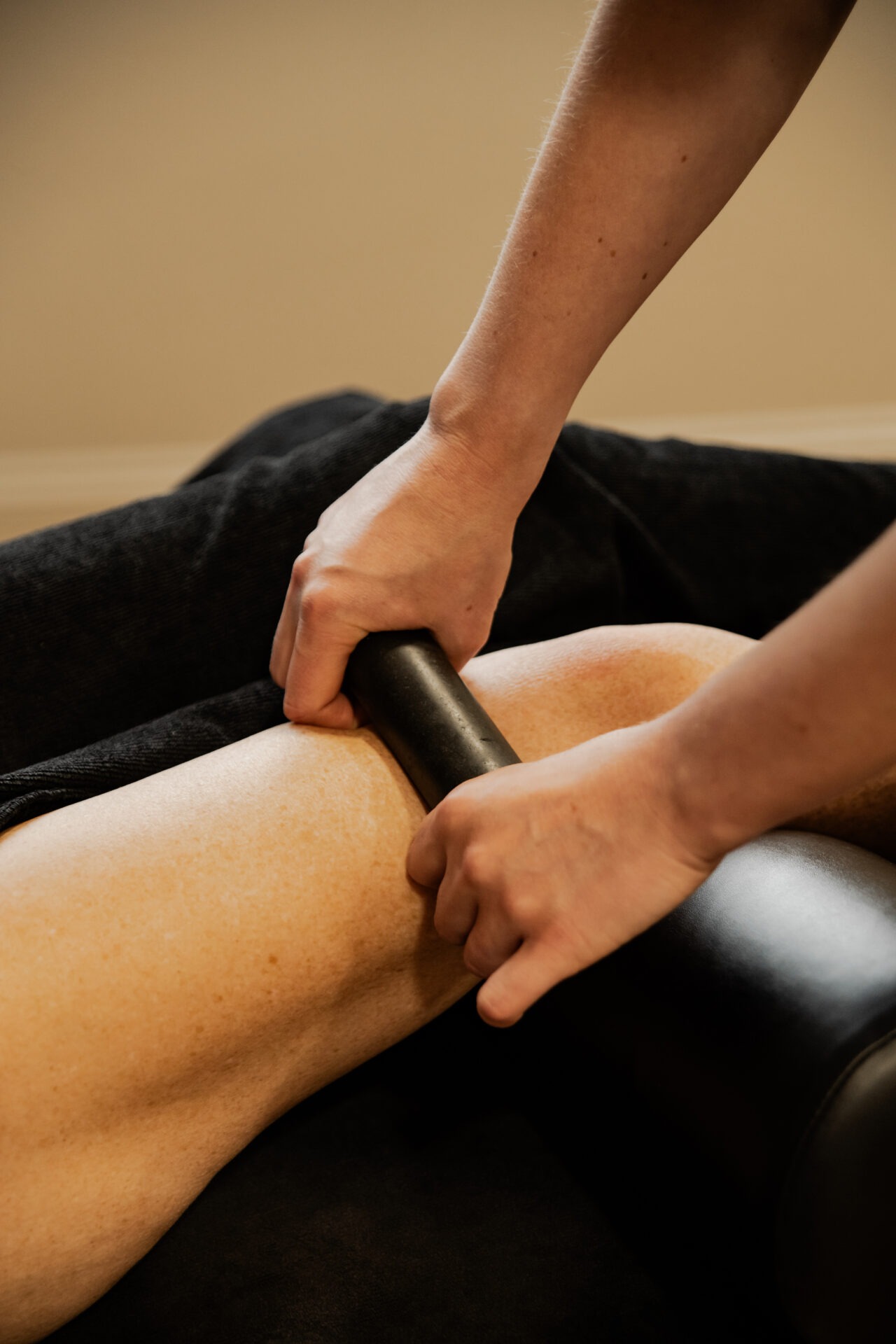
- Manual therapy — such as sports therapy, chiropractic care, or shockwave therapy to address tension and promote recovery
- Load management — reducing running volume or intensity during flare-ups, then gradually rebuilding over time
Remember: the right progression depends on your individual tolerance and recovery rate (which is influenced by your running history over the previous months or years), so timelines and distances will vary from person to person.
Recommended Exercises
Here are some excellent exercises to strengthen the hip abductors and support recovery in runners:
- Side-lying hip abduction
- Hip hikes
- Band-resisted side-stepping
- Side planks with hip abduction
- Single-leg squats
Running Form Tips
Small tweaks in running form can also make a big difference during rehab:
- Try switching from a heel strike to a midfoot or forefoot strike
- Increase your cadence (step rate) slightly to reduce the load per stride
When to Seek Treatment and Guided Rehabilitation
While some mild cases of IT-Band Syndrome may settle with rest and activity modification, ongoing or worsening symptoms are a clear indication to seek professional support, especially for active runners. If pain persists beyond a couple of weeks, limits your ability to train, or repeatedly returns when you resume running, a guided rehabilitation approach is recommended.
Early assessment can help identify contributing factors such as hip weakness, reduced pelvic control, training errors, or running mechanics that may not be obvious without expert input. Structured rehab ensures exercises are progressed appropriately, running loads are managed safely, and manual therapies are used when indicated to reduce pain and improve tissue tolerance. Addressing the root cause — rather than just the symptoms — significantly reduces the risk of recurrence and helps runners return to consistent, pain-free training with greater confidence.
To find out more about treatment options, we encourage you to book a New patient appointment with us: New Patient
We find a good resource for any injury like this is Physiopedia